

ZDF Volle Kanne Talk with Jens Niehl from October 14, 2022
Category: News
Home management may release unvaccinated nurses

Two unvaccinated nurses were released from work in the nursing home and complained about it. The Hessian State Labor Court (judgment of August 11.08.2022, 5 – 728 SaGa 22/XNUMX) has now confirmed that the exemption was legal. After that, retirement homes will no longer have to employ their nursing staff who are not vaccinated against Corona.
Background: Compulsory vaccinations for employees in the care and health sector
Since March 15, 2022, there has been a facility-related vaccination requirement in the care and health sector in accordance with Section 20a of the Infection Protection Act (IfSG), according to which employees must have proof of vaccination against the SARS-CoV-2 virus or current proof of recovery. Since then, nursing staff who cannot provide appropriate proof may no longer be re-employed.
However, this direct ban on employment does not apply equally to persons who have already been employed. If they were unable to provide proof of vaccination or recovery by March 15, 2022, the facility management first had to report the case to the responsible health department, which could then issue a ban on employment.
Home management releases unvaccinated carers
In this case, the manager of a retirement home released two unvaccinated nurses from work from March 16, 2022 without an official ban on employment. She also stopped paying.
The retirement home was based on the regulations in § 20a IfSG. On the other hand, the nurses had complained in summary proceedings before the Gießen labor court. At first they asked to be kept employed. The court dismissed the lawsuits in judgments dated April 12, 2022.
Note: As far as can be seen, the employment relationship formally continued. There was no dismissal.
Unvaccinated carers are not entitled to continued employment
The nurses were also unsuccessful in the next instance.
The LAG confirmed that the exemption was justified and the nurses had no right to continue to be employed in the retirement home. Although § 20a IfSG does not provide for an immediate employment ban for existing employment relationships, the vaccination certificate acts like a professional activity requirement. Consequently, after weighing up the interests, the management of the home was allowed to release the two employees: the employees' interest in being able to go to work speaks for themselves. Employers cannot simply exclude their employees. However, the interest of the residents of the retirement home, who are particularly at risk, to be protected from infection prevails.
With the verdict, both urgent proceedings have ended with legal effect. The main proceedings have not yet been decided.
Outlook: Continued payment of wages during the leave of absence?
The question, which is of interest to both parties, whether wages should continue to be paid for the duration of the leave of absence, could not be decided here. Since the court understands the vaccination as a professional activity requirement, it could be assumed, at least in the case of employees who are unwilling to be vaccinated, that they will not perform their work as owed. Then her right to payment would not continue to exist on a leave of absence.
A final assessment of the decision is only possible when the reasoning has been published and the main proceedings have been concluded.
The new proof law: changes and need for action by employers

On August 1, 2022, the new Proof Act will come into force. The law had to be amended to meet the requirements of the EU directive on transparent and predictable working conditions. In the previous version, the regulations were not very relevant in practice. However, the changes are now urging employers to act.
1. The previous legal situation
Previously, the Evidence Act required employers to provide their employees with written evidence of the most important terms of the contract within one month of the start of the employment relationship.
The main points were those that are usually also part of the employment contract: contracting parties, start and duration of the employment relationship, place and time of work, activity, remuneration as well as holiday duration and notice periods.
Accordingly, most employers fulfilled the obligations of the Evidence Act by simply handing over the employment contract
2. What will change as a result of the new law?
The new Evidence Act expands and supplements the catalog of contractual conditions to be communicated. Among others, the following points are added:
- End date or duration of a fixed-term employment relationship
- duration of the probationary period
- Composition and amount of wages including overtime pay, surcharges, allowances and bonuses as well as any special payments
- Rest break, rest periods, explanation of the shift system and regulations, if applicable.
In addition, the obligation to inform is extended to include information on pension provision, further training, overtime and work abroad.
Also new are information requirements on the dismissal protection procedure. In addition to the procedure to be followed, they also include the notice periods and the period for filing an action for protection against unfair dismissal. In addition, at least one reference to the written form requirement must be made. Precise wording is particularly important here.
Formally, it is important that the strict written form applies. At least one signature from the employer is required. In Germany, the proof may not be provided in electronic form either, although the European directive expressly permits this. In fact, this means that employment contracts are only concluded in writing.
In addition, the previously one-month period for submitting the information for essential content of the contract is significantly reduced. In the case of new employment contracts, the company must provide information on the first working day at the latest about the name and address of the contracting parties, the composition and amount of the wages, the agreed working hours and the agreed breaks and rest periods, as well as the shift system, the shift rhythm and the requirements for shift changes in the case of agreed shift work. Further information about the start of the employment relationship, if applicable the time limit, the duration of any agreed probationary period, the place of work, the job description and the possibility of ordering overtime must be provided within seven days. The transcript with the other information according to § 2 sentence 2 of the Evidence Act must be handed over no later than one month after the agreed start of the employment relationship. This includes, for example, the duration of vacation, the procedure for giving notice of termination and the deadline for filing an action for protection against dismissal, as well as information on any applicable collective bargaining agreements and company agreements.
3. Need for action by employers – what should employers do now?
The changes will be relevant for both new and existing employment relationships.
Model employment contracts can be adapted to the requirements by supplementing them with the other required information.
Old contracts that were concluded before August 1, 2022 should not be subsequently adjusted, but employers must submit the essential working conditions in writing within seven days upon request. Because of this short deadline, it is advisable to prepare a corresponding template for such a case, which meets the requirements of the new Evidence Act.
4. What are the legal consequences of a violation?
So far, employees could only ask their employer to make up for the missed proof. A violation now constitutes an administrative offence. The employer faces a fine of up to 2.000 euros per violation. However, the effectiveness of the employment relationship remains unaffected.
Minimum wage and mini jobs
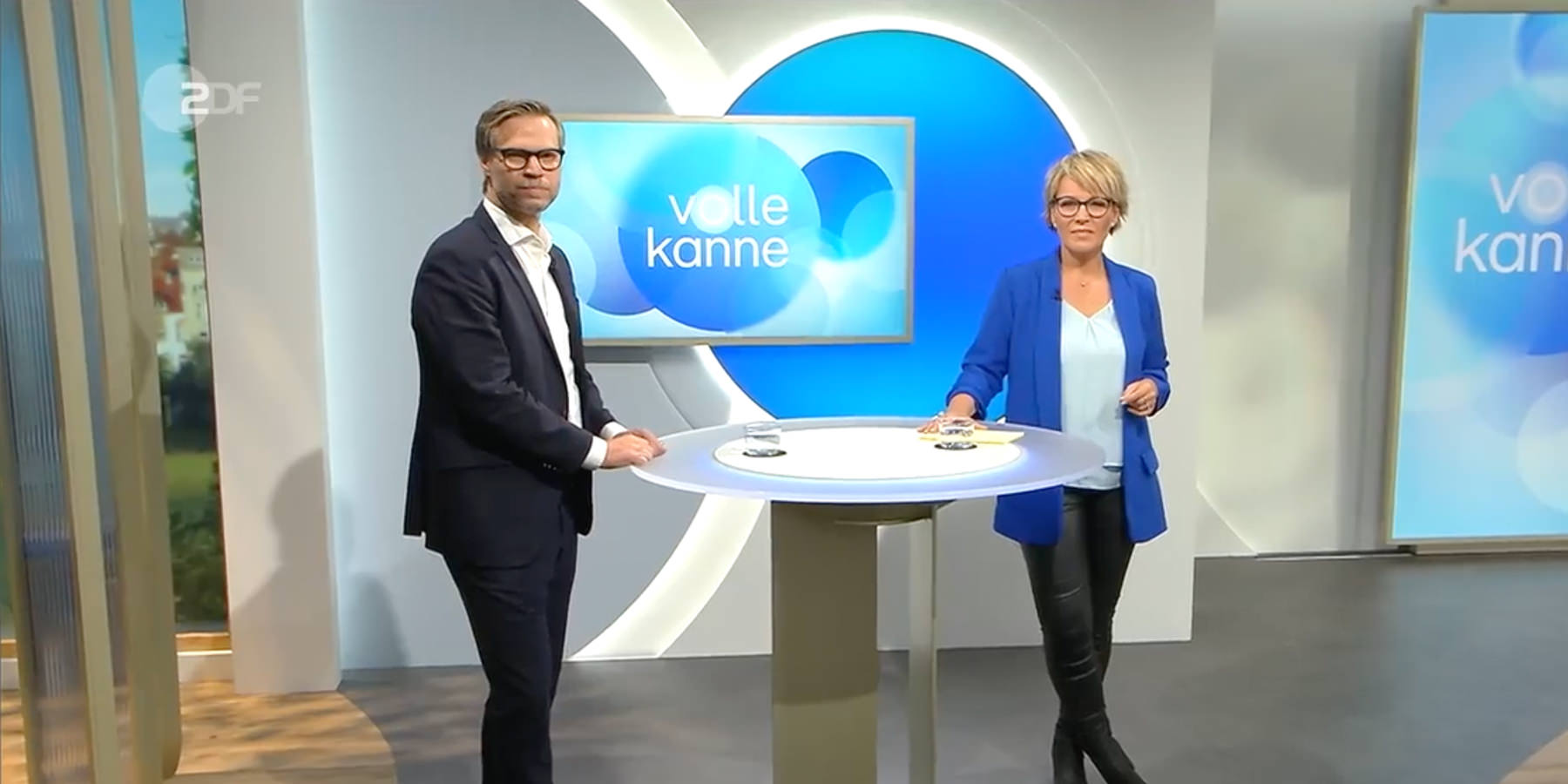
Full pot talk with Jens Niehl from September 30.09.2022th, XNUMX
Award Handelsblatt 2022

In the Handelsblatt lawyer ranking 2022, Dr. Eva Graune, Mr. Markus Tönjann and Mr. Jens Niehl are listed as “Best Lawyers” in the field of employment law for the second time.
Federal Labor Court decision of May 19.05.2022, XNUMX on the notification of mass redundancies: "Should not be a must"

If the employer dismisses numerous employees at once, he must first inform the employment agency. The law stipulates certain information that must be included in this notice of collective redundancy. Other information "should" only be included.
The Federal Labor Court has now decided that this "target information" is not mandatory. If the employer omits them, the terminations do not become ineffective. The lower court saw it differently.
That's what the case was about
An employee who was dismissed for operational reasons in the course of downsizing had filed a complaint. The company terminated a total of 2019 employment contracts within a month in 17. With this number, it exceeded the threshold of § 17 Para. 1 Dismissal Protection Act (KSchG).
If there is a large number of redundancies, the company concerned must inform the employment agency about the forthcoming layoffs. This must be done before the dismissals are announced. If there is no notification of mass redundancies or if it is incorrect, all terminations are ineffective.
The plaintiff had also referred to this and asserted that the notification of collective redundancies was incorrect. Finally, the specification of the
- age,
- gender,
- Professional
- and the nationality of the workers to be made redundant.
The law states that this information only "should" be given - and not "must". However, it follows from European law that all information is mandatory. German law must also be based on higher-ranking European law.
The competent labor court and state labor court have already agreed with the employee. Spicy about it: Even the employment agency has so far assumed that the information mentioned is not mandatory. Accordingly, the competent authority consistently did not object to the collective redundancy notice in this case either.
This is what the Federal Labor Court ruled
The Federal Labor Court did not follow the two previous instances. The reasons for the decision are not yet available. The underlying reasons for the argument can be found in the press release.
It states that the will of the legislature is clear. The judges inferred this view from the wording, which actually speaks against a mandatory character with the term "should". There is also no other assessment to be found in European law. The Court of Justice of the European Union has already clarified that the relevant directive does not necessarily require the indication of age etc.
Conclusion
The surprise was great when the first two instances had declared the "target" information to be mandatory. As it stands, the Federal Labor Court is burying this legal opinion for practical purposes. Whether everything actually stays the same - the notification of collective redundancies is also effective without target information - depends on the justification for the decision. This is to be expected in a few weeks.
By the way: Recently, numerous dismissals by the airline AirBerlin failed because the employer had sent the mass redundancy notice to an incompetent employment agency. The case shows how carefully employers should proceed here and what defense options employees have.
Background: What are the special features of mass redundancies?
There is talk of mass redundancies if so many jobs are cut within 30 days that the relevant threshold in Section 17 (1) KSchG is exceeded.
Example: In companies with more than 20 and less than 60 employees, the threshold is exceeded after five layoffs.
Caution: Termination agreements initiated by the employer may also be understood as dismissal in this sense.
Of course, the usual protection against dismissal also applies in the context of mass redundancies. However, employers must also meet these requirements in particular:
- The works council must be informed in advance in accordance with Section 17 (2) KSchG.
- As already explained in detail, the competent employment agency must be notified of a mass redundancy before the notice of termination is given.
- This must always be supplemented by a statement from the works council and the notification that was made to the works council in accordance with Section 17 (2) KSchG (see above).
- As a rule, the employer is also obliged to negotiate with the works council about a social plan and a reconciliation of interests. This obligation applies regardless of the above threshold, but often coincides with exceeding it.
BVerfG decision of May 19.05.2022, XNUMX - institution-related vaccination obligation constitutional

With its decision of today (decision of April 27.04.2022th, 1, Az. 2649 BvR 21/16.03.2022), the Federal Constitutional Court surprisingly declared the corona-related facility-related vaccination requirement that has been in force since March XNUMXth, XNUMX to be constitutional.
According to § 20 a IfSG, people who work in certain areas of the health care system have had to provide proof of vaccination against the coronavirus or a recovered status since March 15th. Even those who cannot be vaccinated for health reasons must prove this accordingly.
The constitutional complaint filed against this by individuals has now been rejected by the BVerfG.
The institution- and company-related obligation to provide evidence regulated in § 20a IfSG encroaches on the physical integrity protected by Art. 2 Para. 2 Sentence 1 GG. However, the intervention is constitutionally justified.
In justification, the BVerfG states, among other things, verbatim:
- “Measured against this, the legislature is pursuing the legitimate purpose of protecting vulnerable people from infection with the SARS-CoV-2 coronavirus with the provision attacked here. His assumption that there is a significant risk for important objects to be protected, which requires legislative action, is based on sufficiently reliable factual knowledge.
- "The obligation introduced in § 20a IfSG until December 31, 2022, in particular to prove a COVID-19 vaccination or a recovery from the COVID-19 disease, serves to protect public health and the as special groups of people assessed as vulnerable to COVID-19 disease"
You can find the corresponding link to the ruling here.
Mirror interview from March 25.03.2022th, XNUMX with lawyer Jens Niehl on the topic "How openly am I allowed to represent my political opinions at work?"

Again and again, political disputes lead to problems in the employment relationship. The most recent case: A bartender in a luxury restaurant in Baden-Baden had commented on the Russian invasion of Ukraine and generally about Russians in an Instagram video – and was fired for it.
You can read the entire article here.
BAG: Works council election ineffective - inadmissible postal voting for "distant" parts of the company.

On March 16.03.2022, XNUMX, the BAG published in its press release the tenor of an interesting decision with regard to holding works council elections in the form of postal votes.
According to Section 19 (1) BetrVG, a works council election is ineffective if essential regulations on the right to vote, eligibility or the election procedure have been violated, unless the violation could not change or influence the election result. Section 24 of the Ordinance on the Implementation of the Works Constitution Act WO regulates the cases in which the Electoral Board must allow postal voting. If the election does not meet the requirements of § 24 WO, the election can be contested and ultimately lead to ineffectiveness.
- The case decided by the BAG concerned a works council election at a Volkswagen AG plant in Hanover. In the works council election held in April 2018, the electoral board decided to vote in writing for the employees of all production sites outside the closed factory premises.
- Three of these business premises are located directly adjacent to the fenced factory premises.
- After the results of the election were announced, nine employees who were entitled to vote contested the election on the grounds that the postal vote was not allowed to be decided for all of the business premises outside the closed factory premises.
With reference to Section 24 (3) WO, the BAG stated that the electoral board can only decide to vote in writing for parts of the company and very small companies that are geographically far away from the main company. However, there can be no question of a spatially large distance if the parts of the company are located adjacent to the factory premises.
Generally speaking, postal voting is an exception requiring justification under the election regulations. The principle is that voting is done by personally submitting the ballot papers. With in-person voting, election manipulation can be much more effectively prevented.
Postal votes for works council elections according to § 24 WO are only possible in the following “exceptional cases”:
In the event of an absence from the company - A distinction is made between three cases:
- Absence for "personal" reasons: If the employee entitled to vote is absent from the company, e.g. vacation. In accordance with Section 24 (1) WO, postal voting is only possible at the request of the employee.
- Eligible voters who are known to the electoral board
- at the time of the election according to the nature of their employment relationship, in particular those employed in the field or with telework and those who work from home, or
- from the issuing of the election declaration to the time of the election for other reasons, in particular in the event of suspension of employment or incapacity to work, are unlikely to be present in the company.
This regulation also includes people who are on parental leave, for example.
- Geographically remote part of the business or small business:
The electoral board can decide to vote in writing (postal voting) for parts of the business and very small businesses if they are far away from the main business, but belong to the main business under works constitution law.
For the geographically large distance, it must be determined whether, if the works council elections were properly carried out, a separate polling station would have to be set up for the part of the company or the micro-company in order to give the employees there a reasonable polling station
way to give them the opportunity to cast their vote in person. If this is the case, such a polling station can be replaced by written voting.
In the current works council elections, many electoral boards tend to “generously” allow postal votes because of Corona. In view of the BAG's decision, electoral boards should always carefully check the requirements for postal voting.
No minimum wage for compulsory student internships

The Federal Labor Court (BAG) has recently ruled that prospective students who have to complete a compulsory internship in order to study are not entitled to the statutory minimum wage. The statutory minimum wage was EUR 2015 when it was introduced in 8,50 and has since risen to EUR 9,82 gross.
The case:
Specifically, a prospective doctor who had applied to a private university for a place to study medicine sued a clinic where she worked as a nurse for six months for payment of the statutory minimum wage.
According to the study regulations, among other things, the completion of a six-month nursing service was a prerequisite for admission to the course. The payment of remuneration was not agreed between the contracting parties.
BAG: No entitlement to minimum wage for compulsory student internships
The lower courts had dismissed the lawsuit. With a decision of January 19.01.2022, 1, the Federal Labor Court also confirmed the decision of the LAG Rhineland-Palatinate and stated that the defendant was not required to pay the statutory minimum wage according to § 22 in conjunction with § 1 paragraph 2 sentence 1 half clause. XNUMX MiLoG.
Justification of the BAG:
The plaintiff does not fall under the personal scope of application of the Minimum Wage Act, since it can be clearly inferred from the explanatory memorandum that not only compulsory internships during the course of study, but also those that are already mandatory in study regulations as a prerequisite for taking up a certain course of study, are excluded from the recording of the statutory minimum wage are excluded. Incidentally, this applies not only to state universities, but also to private universities.
Significance for practice:
As a result, this means that not only internships that are completed during the course of study are excluded from the regulation for payment of the statutory minimum wage, but also internships that are intended as a prerequisite for admission before the start of the course. This decision is interesting for prospective students as well as for employers who offer such internships.
(cf. Federal Labor Court, judgment of January 19, 2022 - 5 AZR 217/21; LAG Rhineland-Palatinate, judgment of March 16, 2021 - 8 Sa 206/20)